Guide

The Balanced Plate Framework

A simple visual approach to composing meals that feel complete and satisfying, without counting or rigid portion rules. This is general educational content, not personalised dietary advice.

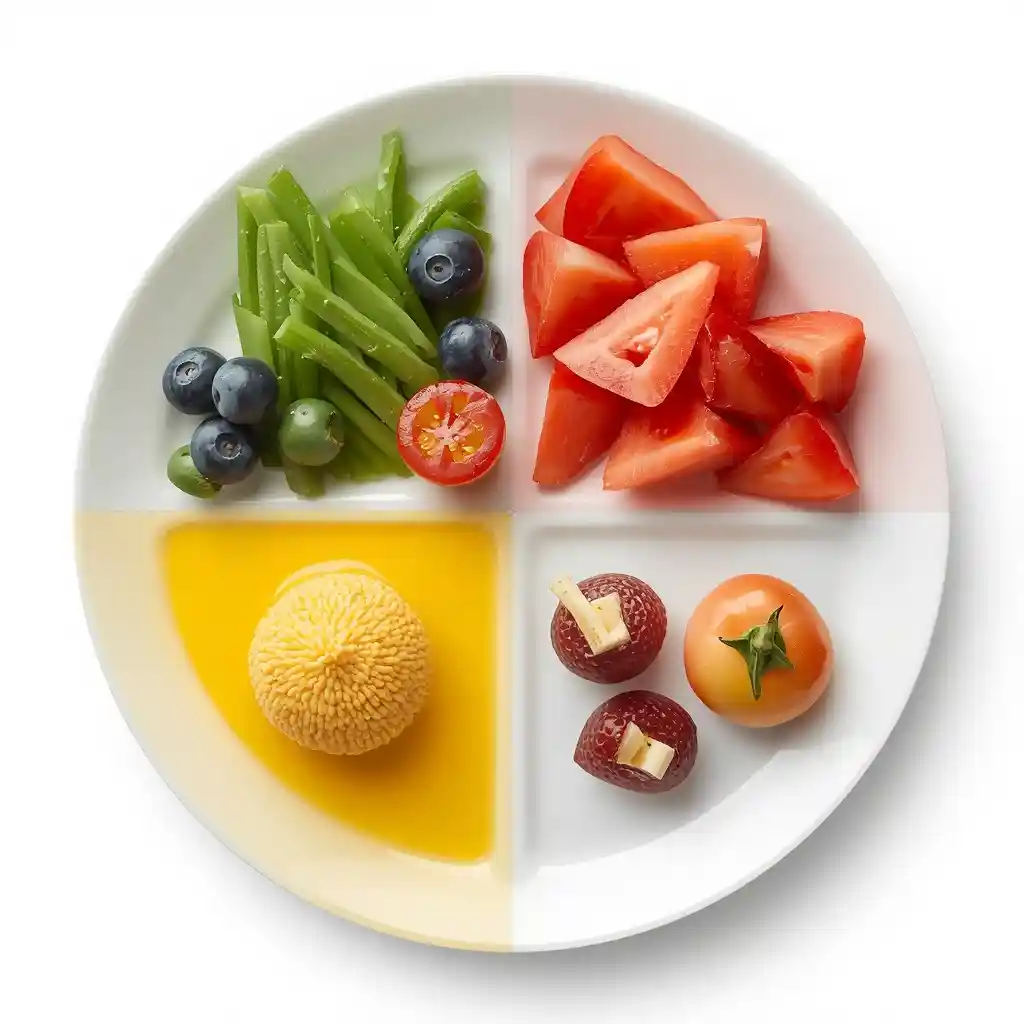
Visual diagram of a balanced plate with proportional food groups
A conceptual representation of balanced meal proportions

What is a balanced plate?

The balanced plate is an educational framework that divides your meal into general proportions: roughly half the plate filled with vegetables and fruits, a quarter with whole grains or starchy vegetables, and a quarter with protein sources.

This is not a strict formula but a flexible visual guide. Some meals will naturally differ, and that is perfectly acceptable. The goal is awareness, not perfection.

Components

Building blocks of a complete meal

Vegetables and fruits

Vegetables and fruits are sources of fibre, vitamins, and minerals in a varied diet. Aim for colour variety across the week to enjoy a broad range of nutrients and flavours.

Whole grains and starches

Whole grains and starches include complex carbohydrates. Options include brown rice, oats, quinoa, potatoes, and wholegrain bread.

Protein sources

Protein sources can help meals feel satisfying. Include legumes, eggs, fish, poultry, tofu, or nuts depending on your preferences.

Nourishing fats

Add flavour and texture to meals. Olive oil, avocado, nuts, and seeds are simple additions to any plate.

Practice

Applying the framework in daily life

01

Start with what you enjoy

Build your plate around foods you already like. Gradually introduce new items alongside familiar favourites.

02

Adjust for the occasion

A light lunch, a shared dinner, or a solo meal each call for different compositions. Flexibility is the point.

03

Notice how you feel

After eating, take a moment to observe how the meal felt and whether it was satisfying. This personal feedback can help refine your choices over time.

Mindful connection

The balanced plate works best when paired with mindful eating. Sit down when possible, eat without distraction, and pay attention to flavours and textures. This practice deepens your understanding of what truly satisfies you.

Remember, this guide is educational. Individual needs vary based on activity level, age, and personal circumstances. Use it as a starting point for exploration rather than a fixed standard.

Explore Quick Breakfasts